

The National Planning Policy Framework (NPPF) has been updated for 2026, introducing a revised approach to national planning policy in England. Published on 17 August 2026, the new Framework aims to make planning decisions clearer, more consistent, and streamlined, while supporting increased housing supply and economic growth.
The changes go beyond a reorganisation of the existing Framework. They introduce a new structure for national planning policy, replace the previous approach to the presumption in favour of sustainable development, and change how certain development plan policies, housing supply, settlements, and residential intensification are considered.
Key Takeaways
- The NPPF now separates plan-making from decision-making policies, with the new national decision-making policies taking effect immediately.
- The previous tilted balance has been replaced by a new set of policies governing the presumption in favour of sustainable development.
- Greater support is provided for residential intensification, including development within residential curtilages and additional floorspace.
- New and revised policies cover housing land supply, strategic sites, well-connected stations, local standards, protected landscapes, and community facilities.
A New Structure for National Planning Policy
The 2026 Framework separates national policies relating to plan-making from those concerned with decision-making.
The government says this is intended to make development management more certain, consistent, and streamlined, while reducing duplication and unjustified local deviation from national policy.
The new decision-making policies took effect when the Framework was published. The structure also uses policy codes rather than relying primarily on the paragraph numbering used in previous versions.
This distinction matters because plan-making policies are not intended to be used when determining individual development proposals. The Framework’s annexes also contain important national policy provisions covering areas such as implementation, definitions, housing supply, and Green Belt assessment.
The Presumption in Favour of Sustainable Development Has Changed
One of the more significant changes is the replacement of the previous paragraph 11 tilted-balance approach.
The 2026 Framework introduces policies S3 to S6 to set out the new approach to the presumption in favour of sustainable development.
Policy S4 provides strong support for development within settlements, while S5 addresses development outside settlements and identifies circumstances where development may be acceptable in principle. S6 provides additional protection for qualifying recent neighbourhood plans.
Housing land supply and Housing Delivery Test performance remain relevant. However, a failure to demonstrate the required five-year housing land supply, or Housing Delivery Test performance below 75%, now feeds into the new policy framework rather than simply activating the previous paragraph 11 balance.
This represents a significant change in how national policy operates when considering development proposals.
Greater Support for Residential Development
The 2026 NPPF updates policies relating to development within existing residential areas.
More types of development within the curtilage of residential properties are supported, while the Framework places greater emphasis on additional floorspace rather than focusing solely on the creation of additional housing units.
The intention is to provide greater flexibility for expanding accommodation and making effective use of suitable residential land.
The change does not create an automatic right to develop. Proposals will still need to be considered against relevant national and local policies, as well as the circumstances of the individual site.
Changes to Development Around Well-Connected Stations
The Framework expands support for development around well-connected railway, Underground, tram, and light-rail stations.
The policy applies to qualifying stations within the top 80 Travel to Work Areas by Gross Value Added, increasing the scope from the top 60 areas proposed during consultation.
Development is generally considered within reasonable walking distance of qualifying stations, with the Framework recognising that factors such as topography, route quality, and physical barriers can affect what constitutes a reasonable walking distance.
Minimum density expectations have also been introduced, with at least 35 dwellings per hectare expected in qualifying locations and at least 45 dwellings per hectare where the relevant higher service frequency applies.
A New Approach to Housing Land Supply
Housing land supply remains an important part of the planning system, but the 2026 Framework changes some of the rules around how it is assessed.
Where the relevant development plan housing requirement is more than five years old, local housing need is now used in the calculation.
The Framework also introduces alternative 5% and 20% buffers in specified circumstances, including a new route where an adopted housing requirement is substantially below current local housing need.
The definition of a deliverable site has also been clarified. Sites with major outline permissions or allocations cannot simply be assumed to contribute to the five-year supply without clear evidence that they can be delivered within the relevant period.
New Categories for Strategic and Medium Development
The 2026 Framework introduces a clearer national definition of strategic sites.
A strategic site is a residential, commercial, or mixed-use development delivered in multiple phases, with significant infrastructure requirements and a need for a masterplan. For residential-led development, this would typically mean capacity for around 1,500 dwellings.
The Framework also identifies a new category of medium development, covering housing developments of 10 to 49 dwellings on sites no larger than 2.5 hectares.
These distinctions provide greater recognition of the different planning and infrastructure requirements associated with development at different scales.
Changes to Local Planning Policies
The new Framework also affects how existing development plan policies are considered.
Under Annex A, an existing development plan policy that is materially inconsistent with a national decision-making policy should be given very limited weight. There are exceptions where a policy has been examined and adopted, or a neighbourhood plan made, against the August 2026 Framework.
This means the age of a local plan is not, by itself, the deciding factor. The important consideration is the relationship between the existing local policy and the new national decision-making policies.
Other Key Changes
The 2026 NPPF introduces or updates policies across several other areas.
- Strategic development: National policy now provides a clearer framework for strategic sites and the infrastructure required to support them.
- Local standards: Quantitative standards in development plans should be limited to areas where local variation is justified, including specific circumstances relating to energy efficiency and internal layouts.
- Protected Landscapes: The Framework strengthens protection by making clear that major development in Protected Landscapes should be refused except in exceptional circumstances.
- Community facilities: Policies have been strengthened to help prevent the unnecessary loss of facilities such as public houses where this can reasonably be avoided.
- Telecommunications: The Framework provides clearer support for telecommunications development in appropriate locations, including schemes that could improve connectivity for rail users.
- Accessible and adaptable homes: Development plans should set proportions of homes on major developments to meet relevant Building Regulations standards, with the Framework stating that at least 40% should meet M4(2), subject to appropriate exemptions in the development plan.
The Framework also updates policies relating to rural businesses, agricultural development, viability, developer contributions, transport, heritage, and other areas of the planning system.
What Happens Next?
The new decision-making policies are already in effect, while plan-making has separate transitional arrangements set out in the Framework.
The NPPF forms part of a wider programme of planning reform intended to create a clearer, more consistent planning system. Its practical impact will depend on how the revised national policies interact with existing development plans and future local plan-making.
For anyone involved in planning, developing, or delivering property, understanding the new Framework will therefore be important when assessing development opportunities and preparing proposals under the updated national policy environment.
JVB Construction
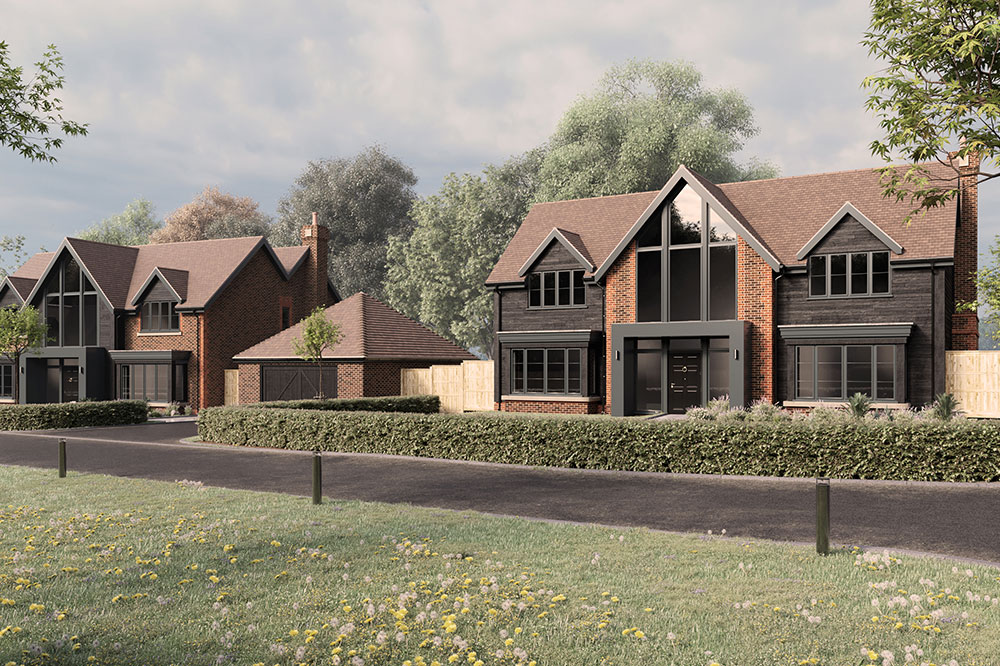
Changes to national planning policy can influence how residential developments are assessed, designed, and delivered.
JVB Construction is a luxury house builder and principal contractor specialising in bespoke new-build homes, substantial extensions, and major renovations across Surrey, London, and the Home Counties.
The team works across the construction process, supporting clients from initial planning and design through to construction and completion.
Planning a new-build, major renovation, or substantial extension? Get in touch with JVB Construction to discuss your project.

